Saturday, October 10, 2009

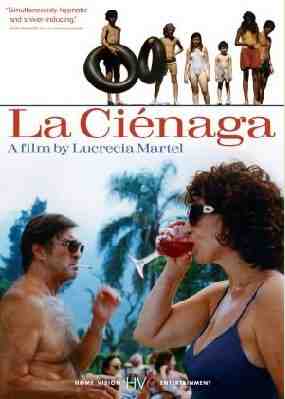
La Cienaga(2001)


English title: The swamp

Director: Lucrecia Martel

Language: Spanish

Two cousin sisters struggle with their respective families in the unbearable heat and humidity of an Argentinian summer. Children go hunting, people get drunk, people get hurt, the Virgin appears and still the two families get sucked into the swamp that is their life with each passing day.
From the very first shot till the last, this film is all about the visuals. As the credits roll, the film opens with one of the most amazing opening sequences ever. The camera hovers around a poolside. We see middle-aged people with wrinkled skin, on a drinking spree. Their hands tremble, their words muttered, the stealthy camera shows us a perfect picture of the typical bourgeoisie hedonism in the present Argentinian society and thus sets up the mood for the whole film. Throughout the entire film, the camera moves around with utmost stealth, almost like a voyeur. The children of the two family spend their days by the pool or hunting in the forest or sleeping with the maid or even each other. There's always an anticipation of sexual escapades but it is always overcome by violence. The children get into fights, accidents and hurt themselves. No one around seems to be normal except a little boy and the maid. Interestingly, both of them seem to be confined within abnormality. Every frame suggests that confinement, every shot prepares us for something bad to happen to the normal people. The director uses her camera to take us almost into the minds of the characters. Sometimes, the close up shots are so close that you might just hear the characters think. She makes use of the sounds in a regular household as well as the various silences to suggest the fate of the characters. Apart from the physicality of the whole scenario, we see no one answering the telephone throughout the film and the Virgin only appearing before the poor Indians, thus emphasizing the faithlessness and lack of communication amidst the class differences in the Argentinian society. The mostly amateur cast puts in a strong performance within a seemingly erratic but indeed very tightly bound screenplay. But what really makes this film work is the excellent cinematography. The director says almost everything through the empty spaces, the silences and the few recurring motifs. If not for anything else, this film should be a must watch for an extensive lesson in Mise-en-scène.
Thursday, May 7, 2009

Charlotte et Véronique, ou Tous les garçons s'appellent Patrick(1959)


English title: Charlotte and Veronica or All the boys are called Patrick

Director: Jean-Luc Godard

Language: French

JLG's first film as a director is a delightful comic short about two girls who set up a date with the same guy on two different days and later find him going out on a date with a third girl. Its perhaps the only JLG film that has a story written by someone else. And when that someone is none other than Eric Rohmer, it shows in every frame of the film. There are no typical JLG trickeries in the film, except maybe for the music and the Chaplinesque portrayal of the protagonists. Instead, the charm, the wit, its all Rohmer. Nevertheless, a very enjoyable film.

Friday, May 1, 2009

La double vie de Veronique(1991)


English Title: The double life of Veronique

Director: Krzysztof Kieslowski

Language: Polish, French

The much famed director of the Three colors trilogy, in this film, takes us on a peculiar journey that constantly shifts between the erotic and the melancholy. It is really one of those films that hands over a puzzle to the viewer. How he solves it is how he sees the film.
This is essentially the story of Weronicka, a Polish girl and Veronique, a French girl, who seems to have much more than physical appearance in common. But Kieslowski, from the opening scene makes it clear that the surface hides many a haunting images. As the film opens, little Weronicka looks at the sky and sees the beautiful stars while the little Veronique only sees the falling leaves. Then we see a grown up Weronicka waking up from a deep sleep just because she feels someone is out there, with her, always. She is almost an ascetic, almost renouncing everything material. Her relation with her father, her aunt or her lover is almost superficially loving. Her only passion seems to be music which she takes up inspite of a heart condition and dies on stage. And at the same time, Veronique feels an urge to let go of her musical aspirations as she feels something has gone amiss from her life. As the story shifts to her, we understand she is a very earthy human, very much tied in the bonds of humane life. She cares for her father, falls in love with strangers. But whatever she does, the very passion of her nature is imminent. In other words, she completes Weronicka.
Kieslowski's use of music at times gives the film the feel of a haunted supernatural story, at other times the music transforms the film into sheer poetry. He successfully draws parallels between the simultaneous lives of the two girls. The shot where Veronique rushes into a bus, clicking pictures of Weronicka standing, marooned, on a crowded square or the shot where Veronique plays with a puppet, while another lies silently on the table, makes up the mood of the entire film. A huge part of the film is almost a puppet show with Kieslowski playing around with Veronique as the dead Weronicka lies in her grave. And his show becomes all the more interesting due to the puppet he finds in Irene Jacob. She, with her wide array of ever changing expressions, dreamy and almost lost eyes, make Weronicka and Veronique who they were supposed to be. She is quiet for most of the part yet so vocal. Kieslowski is a clever director. He never brings his story to any conclusion. He just leaves it hanging in there, waiting for the viewers to grasp it. Watching this beautiful piece of work is almost like becoming a part of it, where the cinema and the viewer lead a double life, where they make each other complete.

Saturday, March 28, 2009

Mon Oncle Antoine(1971)


English title: My uncle Antoine.

Country: Canada

Language: French

Its a chilly and snow filled december in Quebec. A father leaves his children and wife behind to find work. An undertaker raises a child as his own. An employee has secret liaisons with the wife of his employer. A mother sees her son die. A whole town basks in the joys of christmas and fights the hardships of daily life. And a little boy watches with his big, blue, innocent eyes. We watch through him. We watch with him. And we watch him as he struggles to become a man, in every possible way. Jutra's film about the coming of age of Benoit is so simplistic, so real and so heart wrenching, it reminds us of Apu in "Aparajito". Benoit learns to take on the world, he gets a taste of death, love, betrayal and sex. And at the end, he gazes innocently at the life out there, the real life where there's no uncle Antoine to protect him, no Carmen to love him. This film is a wondeful journey through two fateful days in Christmas time. But a journey that changes lives forever. And one that will change the way you look at life too.

Friday, March 6, 2009

Dev D(2009)


Director: Anurag Kashyap

Language: Hindi

Kashyap arrived on the scene a few years back with "Black friday" based on the Mumbai blasts. It had its shortcomings but made us wait for his "Paanch", which never came out. Then came "No smoking" and Anurag took Hindi cinema on a ride, a bumpy roller-coaster ride. With "Dev D" the ride comes a full circle. Kashyap has finally given Bollywood what it deserves, a true masala entertainer for the serious cine-lovers. Shed all your inhibitions, this is not your regular Hindi movie. It is a tale of lust, love, lust, obsession, lust, psychedelia and lust. Bollywood finally grows up, with the help of a man who has disgraced the silver screen more than once before. Devdas Mukherjee had always been an epitome of self pity, drunkenness and failed love in Indian cinema. Dev Dhillon is instead an absolute bastard who fondles other women and cracks up at rumors of Paro kissing someone else. Dev Dhillon is essentially just another avatar of Devdas Mukherjee, yet so very different. He drowns himself in vodka, does coke, calls up Paro's house at 4 in the morning, yet he sees Chanda's face when he closes his eyes. Dev D doesn't believe in "moving on", yet he truly does by the end of the film.
What Kashyap does to the much cliched tale is quite unexpected. It has always been about the man, Devdas himself. Kashyap, on the other hand, examines each and every character with utmost sincerity. He gives us the two of the strongest female leads in Indian cinema. Paro sends her nude pictures to Dev, carries a mattress on a bicycle to a field to have sex with Dev and ultimately, on being refused, manages to have her revenge too. Lenny on the other hand is not afraid being filmed while she gives a blowjob to her boyfriend, or accusing her father of getting aroused by her mms, or becoming Chanda by night. Kashyap gives these characters various shades of gray and turns them from mere props to symbols of women empowerment. Not that he accomplishes this all alone. He is helped by the wonderful Mahi Gill and Kalki Koechlin. Kalki's almost deadpan expressions, indifferent moaning and impish smiles alongwith Mahi's big eyed passionate looks mark their arrival on the big scene. Abhay Deol is fantastic as Dev. The use of light throughout is brilliant. Kashyap uses different shades of blue, pink to set the dark, often brooding mood of the film. I already talked about the music before. How it was all different and stuff. But what I was amazed to find was all the 18 songs were used in the film. And still the film didn't stall for a single moment! Kashyap makes use of the music wonderfully well, sometimes to tell a part of the story and take it forward, sometimes to compliment the mood and sometimes just as a background score. His use of music is actually reminiscent of Godard. I don't know if its only me or Lenny reading Moravia's "Contempt" with Brigitte Bardot on the cover alongwith the use of music is really a tribute to the French master. I hope it is because it would be a most befitting one. Kudos to Mr.Kashyap for finally giving us a nouvelle vague Devdas.

P.S : Did anyone else notice three random guys in the film? Once when Dev first goes with Chunni to Chanda's den, next when Dev drunk drives and almost crashes his car? Even if you did, did anyone else think they were the three horsemen of apocalypse? Gah! I see too much into everything!

Wednesday, March 4, 2009

La Gran Final(2006)


English Title: The great match

Director: Gerardo Olivares

Language: Kazajo dialect(Mongolia), Tamashek(Niger) and Tupi(Brazil).

Scene 1: A group of Mongolian nomads and a few soldiers play football on the snow-capped peaks of the Altai mountains as a few others try to plug in a television to an electricity pole.

Scene 2: Three African men, clad in yellow and green jerseys dance around foolishly on a desert in Niger as a handful of others watch a television with glum expressions.

Scene 3: A native Indian in the forests of Amazon, "9" painted on his back, climbs the highest tree with an antenna on his back as his tribesmen wait eagerly for reception on a television.

This unique film is all about scenes exactly like these. Its about three very different groups of people with one similarity. They can go to any lengths to watch the final match of the 2002 football World Cup. The nomads risk losing all their savings in paying fines to the Government, the Africans forget all their errands and take a detour, the Indians risk getting shot. All for one reason. To watch Brazil take on Germany in the final. It is the love for the greatest game on earth that is contained in each shot of this film. Every frame speaks of the passion for football. Only that may be more than reason enough to watch this film. Add to it the wonderful cinematography, brilliant use of wide angle shots on the desert and the mountains, absolutely hilarious situations(like an African guy selling pages of Playboy in the midst of a desert) and also the very subtle socio-political undertones. And voila! You can't afford to miss this film.

Tuesday, February 17, 2009

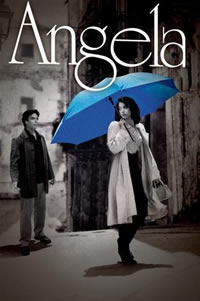
Angela(2002)


Director: Roberta Torre

Country: Italy

Angela runs a shoe store with her husband Saro Parlagreco, when actually they deal in drug trafficking. Angela helps put up the shoe store show while Saro with the help of his cousin, controls his well disguised drug business. Problems start when Saro brings a new guy, Masino to help him. Angela and Massino fall for each other and their torrid affair gives the suspecting police a chance to round them all up. This little film is supposedly based on a true incident that took place in Palermo, Italy. The director's use of handheld camera and extreme closeup shots of all the characters make this look like a docudrama more than a film. And her use of closed, dark spaces give this film a very claustrophobic feel. The only saving grace is the very beautiful Donatella Finocchiaro as Angela, on whom the camera hovers for alomost the entire length of the film. She almost carries the film single-handedly and there's really not much else to look out for. What could have been a gripping tale of passion, guilt and organized crime remains only a mellowed Italian drama.